Key Takeaway
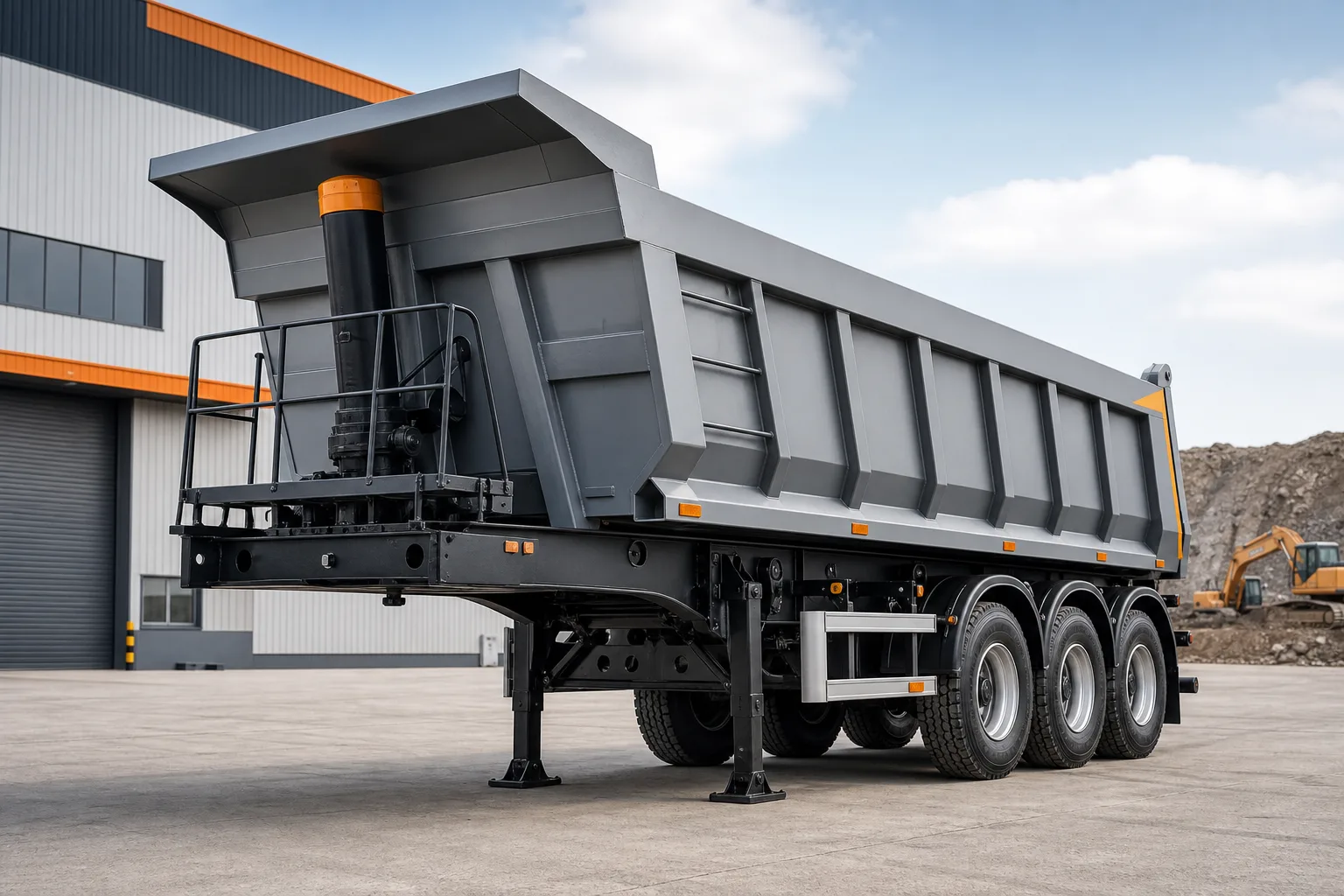
Site conditions and unloading patterns should guide tipper body decisions.
Understand The Material
Construction fleets move aggregates, soil, sand, stone, coal, and other dense materials. Material density, abrasion, moisture, and loading method should influence body design and wear expectations.
Study The Unloading Site
Tipper performance depends on site access, ground condition, unloading angle, overhead clearance, and cycle frequency. A trailer that works on a clean yard may face very different stress on active construction sites.
Do Not Treat Hydraulics As An Afterthought
Hydraulic system expectations, body movement, fitment access, and maintenance planning should be discussed early. These decisions directly affect field reliability and serviceability.
A good tipper trailer buying decision begins at the site, not in the catalog.
Buyer Checklist
Use this checklist before your next inquiry.
Material density and volume
Site approach and unloading angle
Hydraulic system expectations
Body floor and side wall wear
Tailgate operation
Maintenance access