
01
Requirement Study
Payload, road condition, application, cargo format, dimensions, and operating expectations are mapped before any production decision.
01
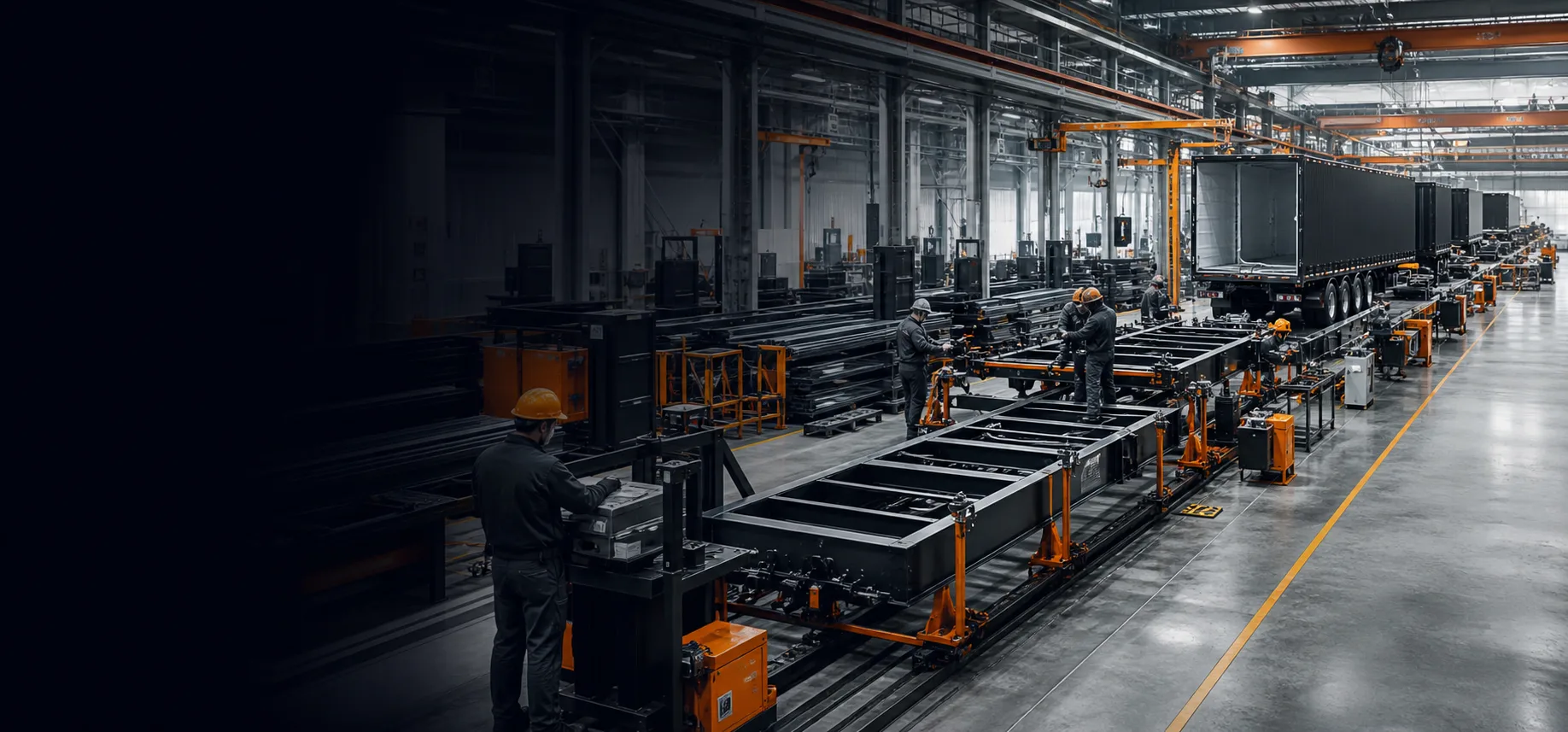
Manufacturing Process
BALAJI ENGINEERING’s process is built around practical engineering, staged fabrication, inspection discipline, and clear handover for heavy-duty trailer manufacturing.
Process Philosophy
Trailer manufacturing is not a single shop-floor activity. It is a sequence of decisions: understanding the application, selecting the right structure, preparing material, controlling alignment, integrating components, inspecting details, and preparing the product for actual work.
This page explains that sequence in a buyer-friendly way so every inquiry can move from requirement to recommendation with fewer assumptions.
Step Timeline
01
Payload, road condition, application, cargo format, dimensions, and operating expectations are mapped before any production decision.
02
Product configuration, chassis structure, body style, axle layout, materials, and fabrication sequence are planned for the use case.
03
Steel plates, sections, components, and bought-out parts are prepared and staged for an organized production flow.
04
Cutting, forming, welding, fixture alignment, and structural assembly convert prepared material into trailer chassis and body systems.
05
Suspension, axles, hydraulic parts, side walls, electricals, braking elements, and functional accessories are integrated.
06
Dimensional checks, visual review, weld and fitment checks, movement readiness, and product-specific inspection are completed.
07
Surface preparation, finishing, paint or coating coordination, branding areas, reflectors, and delivery appearance are finalized.
08
Final review, documentation, buyer communication, and dispatch readiness close the manufacturing cycle.
Process Controls
Controls are placed where they matter most: before design, during structure work, through component integration, and before dispatch.
The product is reviewed against the intended load, route, and site conditions.
Fixture-based checks help control chassis geometry and body fitment.
Steps are organized so each stage hands over clearly to the next.
Final checks focus on practical readiness, documentation, and buyer confidence.
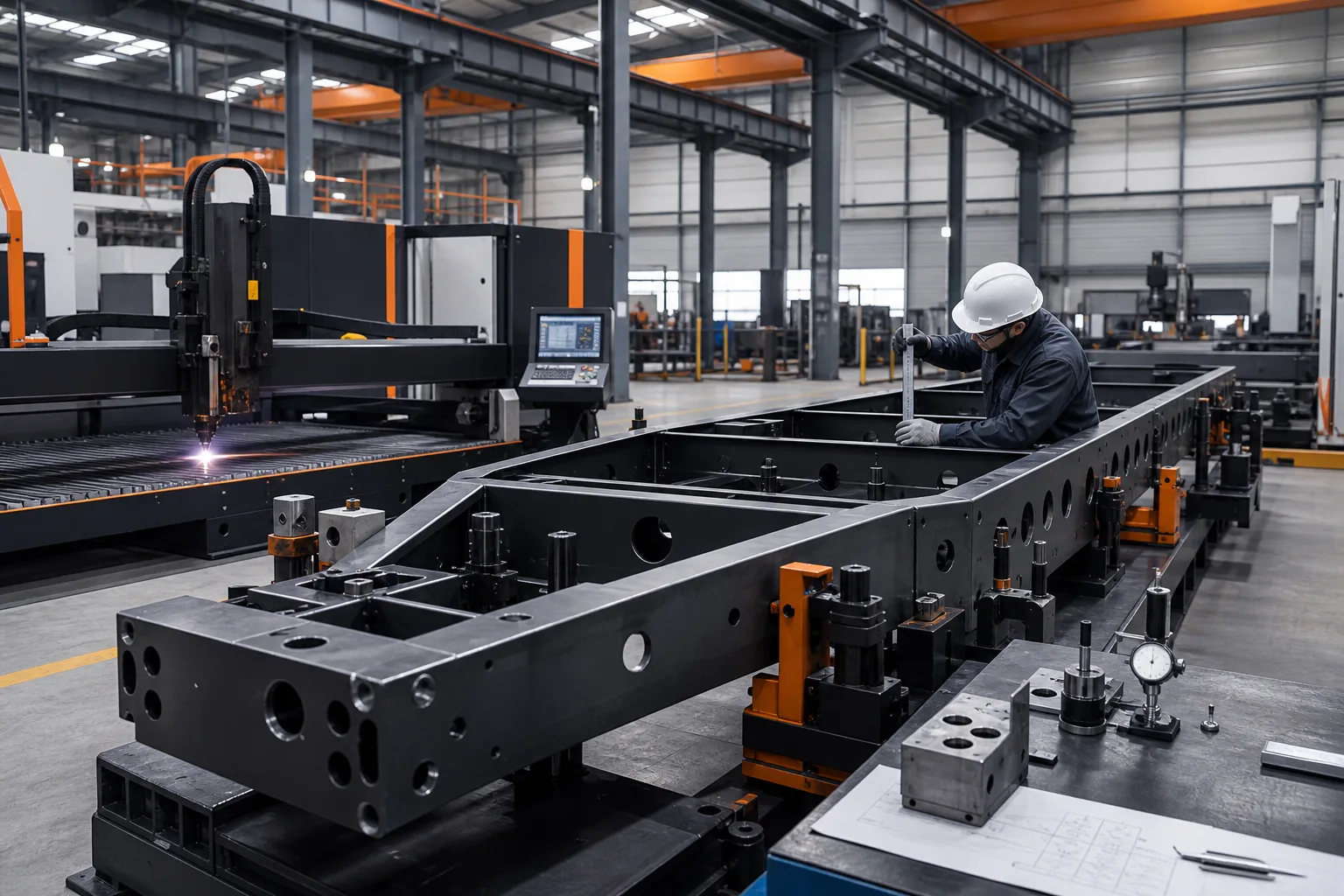
Documentation
A production process becomes more useful when each stage leaves enough clarity for the next team, the buyer, and the final handover.
Requirement brief and product configuration notes
Material and component planning sheet
Fabrication and assembly checkpoints
Inspection observations and final handover notes
Buyer Outcomes
A clear process helps buyers understand how product decisions are made.
Organized production stages reduce preventable delays and rework.
Inspection and handover checkpoints create stronger buyer trust.
From Process To Product
Share load details, cargo type, operating route, site conditions, and preferred trailer format. The team can use the process to shape a practical recommendation.